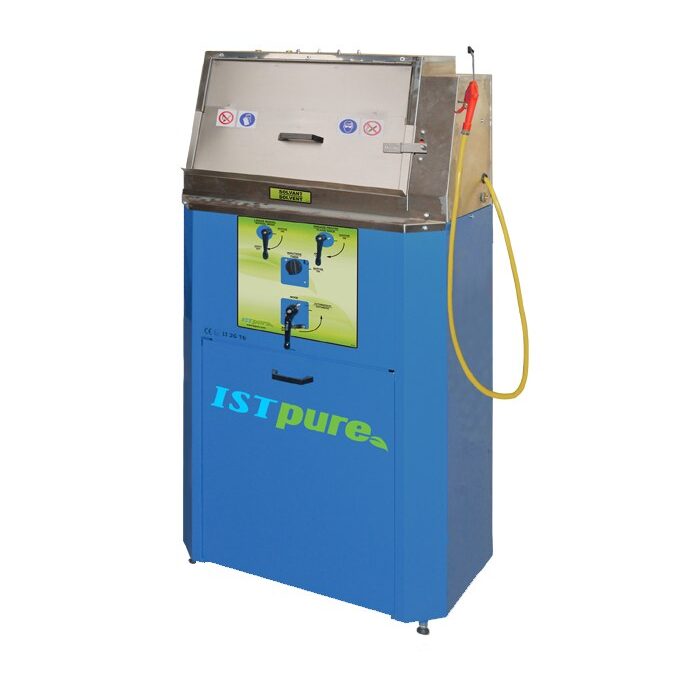
Every paint shop cleans spray guns. The question is whether it happens in an open bucket of dirty thinner or in a machine built for the job. Bucket cleaning wastes solvent, puts your painters’ hands and lungs in the fumes, and still leaves guns half-clean —...
Anything metal that sits outside — a skid of machined castings waiting on a truck, a gearbox in a laydown yard, a vehicle staged for ocean transit — is fighting two problems at once. Water and dirt have to be kept off it, and the moisture already trapped...
Most shops know roughly what they pay for fresh solvent. Far fewer can say what they pay to get rid of the dirty stuff, and almost nobody adds the two together. That combined number is what actually decides whether an on-site recycler makes sense — and it is...
Every paint shop cleans spray guns; the question is whether it happens in a bucket of dirty thinner or in a station built for the job. Bucket washing wastes solvent, exposes painters to fumes and splash, and still leaves guns half-clean. A purpose-built spray gun...
If your press operators are bumping ink to hit density targets, the problem usually isn’t the ink — it’s the anilox. Every hour of production drives ink and coating residue deeper into engraved cells. Cell volume (BCM) quietly drops, ink transfer falls...
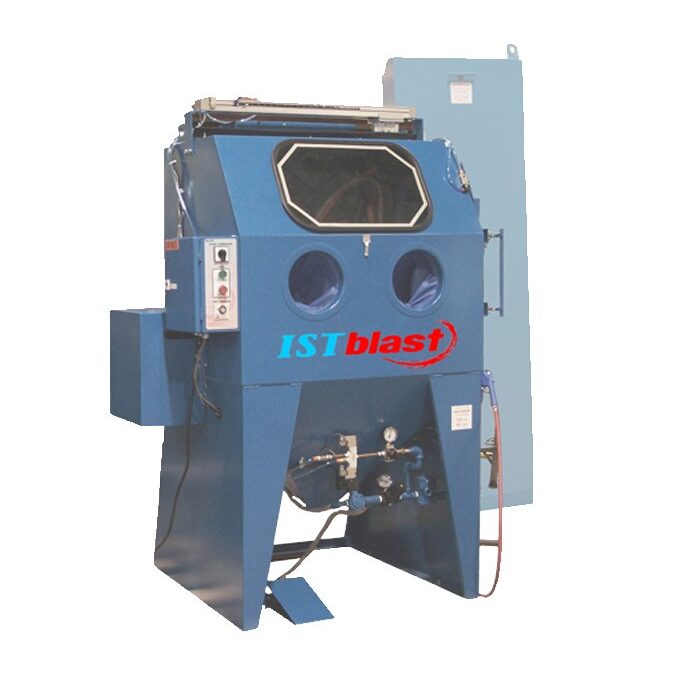
Most shops buy finishing equipment one piece at a time — a blast cabinet this year, a spray gun washer the next, a solvent recycler when disposal costs get painful. But blasting, painting, and cleanup aren’t separate purchases. They’re one connected line,...