

Ultrasonic Parts Cleaners
Showing all 4 results
-

Industrial Stainless-Steel Parts Washer Baskets
Price range: $199.35 through $284.50 -
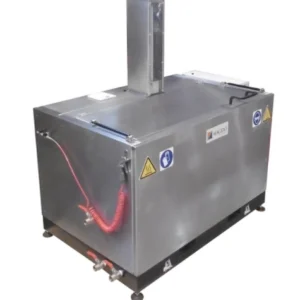
Magido U-700 Ultrasonic Immersion Parts Washer
Request a Quote -

MAGIDO ULTRA-900 Ultrasonic Parts Washer
Request a Quote -

SB300 Ultrasonic Detergent – 5 Gallon Pail
$195.00
An ultrasonic parts cleaner reaches what spray and immersion washing can’t: tight tolerances, blind holes, threaded bores and intricate assemblies. High-frequency sound waves create cavitation in the cleaning solution that lifts oil, grease, carbon and fine particulates out of every crevice, then rinses away. Solvent Recycling Systems supplies industrial ultrasonic cleaners, large-tank ultrasonic parts washers and the detergents to run them.
Industrial ultrasonic parts washers
Magido U-700 Ultrasonic Immersion Parts Washer: all-stainless large ultrasonic cleaner with a 70-gallon tank and a pneumatic lift platform that lowers and agitates the load during the cycle.
Magido ULTRA-900 Ultrasonic Parts Washer: heavy-duty stainless ultrasonic and immersion cleaning for production environments in machining, aerospace and high-tolerance manufacturing.
Ultra Sonic Power Corporation units: we’re a USPC distributor, which gives you more options across tank size and power. Ask us for a recommendation.
How ultrasonic cleaning works
Transducers bonded to the tank vibrate at ultrasonic frequencies, sending pressure waves through the cleaning solution. Those waves form millions of microscopic bubbles that implode against the part surface. This is cavitation, and it scrubs every wetted surface, including inside bores and under fasteners, without brushes. Heat and the right detergent speed the process up; agitation and a clean rinse finish it off.
Ultrasonic cleaner solution
Ultrasonic tanks need a low-foaming aqueous detergent; foam cushions the cavitation and cuts cleaning power. SB300 Ultrasonic Detergent is a low-foaming alkaline cleaner formulated for ultrasonic and immersion tanks. Never use flammable solvent in an ultrasonic unit unless it’s rated for it.
What industries use ultrasonic parts cleaners
Firearms and ammunition: bolts, slides, trigger groups, suppressor components and brass. Ultrasonic is the go-to gun cleaner for production shops.
Aerospace: bearings, valves, hydraulic and fuel-system components.
Machining and precision manufacturing: removing coolant, chips and polishing compound before inspection, assembly or plating.
Heat treating: pre-cleaning parts so they go into the furnace free of oil.
Ultrasonic vs. other parts washers
For heavy grease and big parts, a spray cabinet or aqueous parts washer or a solvent parts washer is faster and cheaper per part. Ultrasonic earns its place where geometry or cleanliness specs are tight. Many shops pre-clean in a spray washer and finish in ultrasonic. Stainless parts washer baskets keep small parts organized through every stage.
Keep clean parts from rusting
Aqueous cleaning leaves bare steel prone to flash rust. Add a Cortec rust preventative to the rinse, or pack dry parts in VCI bags for storage and shipping.
Ultrasonic parts cleaner FAQs
How does an ultrasonic parts cleaner work?
Transducers send high-frequency sound waves through a cleaning solution, creating millions of microscopic bubbles that collapse against the part surface (cavitation). That scrubbing action lifts oil, grease, carbon and fine particles out of blind holes, threads and crevices that spray or brush cleaning cannot reach.
What solution goes in an ultrasonic cleaner?
Use a low-foaming aqueous detergent made for ultrasonic tanks, such as SB300. Never use flammable solvents in an ultrasonic cleaner unless the unit is specifically rated for them.
What is the difference between an ultrasonic cleaner and a parts washer?
A standard parts washer cleans with spray, brushing or immersion. An ultrasonic parts cleaner adds cavitation, so it cleans complex geometry and tight tolerances far more thoroughly. Many shops use both: a spray or solvent washer for heavy soils and ultrasonic for precision parts.
Can ultrasonic cleaners clean firearms parts?
Yes. Ultrasonic cleaning is widely used for gun parts, bolts, suppressor components and brass because it reaches inside bores and small recesses. For production volumes, industrial units like the Magido U-700 and ULTRA-900 handle full baskets of parts.
How big an ultrasonic cleaner do I need?
Size the tank to your largest part or basket load with room to spare, then match capacity to how many loads you run per shift. Tell us your parts and volume and we will recommend a unit.
Not sure which ultrasonic cleaner fits your parts? Talk to a parts-washer expert and we’ll size it for you.
