

Description
VpCI®-391 is a water-based temporary coating that dries hazy and genuinely non-tacky, so parts do not pick up shop dirt. Cortec states it keeps surfaces corrosion-free before welding without hurting weld geometry or mechanical properties. The 55-gallon drum is the size for a dip tank or an airless spray station at the end of a machining or fabrication line.
VpCI-391 is the coating Cortec puts forward when an OEM is tired of scraping cosmoline-type preservatives off supplier parts. It gives medium- to long-term protection indoors and outdoors, does not need to be removed before the part is used, and can be welded through, which eliminates the weld-prep cleaning step. When it must come off, hot water or an alkaline cleaner does it. In the Cortec Product Consultation Guide it is rated 4 (outside, uncovered storage) on carbon steel, stainless steel, cast iron, aluminum, galvanized steel, copper, brass and solder. At 0.4 lb/gal VOC it sits well under the 1 lb/gal Cortec quotes for its water-based coatings against more than 3 lb/gal for solvent-borne ones, and it is available in colors.
Typical applications
- Harsh, outdoor, unsheltered applications
- Weld joint protection
- Multi-metal protection
- Equipment preservation and preventative maintenance
- Transit protection
- Machined surfaces on valves, pumps, motors and gearboxes awaiting shipment
- Replacement for cosmoline-type supplier coatings that would otherwise be cleaned off before assembly or welding
- Unpainted areas on finished equipment
How to apply VpCI-391
- Surface preparation. The substrate must be free of grease, oil, dirt, fingerprints, drawing compounds, rust inhibitors and anything else that would affect adhesion. Cortec recommends VpCI-440 or a similar phosphatizing pretreatment on production lines, and a minimum of NACE No. 3 / SSPC-SP6 commercial blast on structural steel. No wash primer is needed on aluminum or galvanized steel for this product.
- Mixing and dilution. Power-agitate to a uniform consistency with a squirrel-cage or drill mixer. VpCI-391 may be thinned with water up to 10 % by volume to adjust viscosity; ask Cortec or us before going further.
- Conditions. Apply between 45 and 90 °F (7 to 32 °C) with the surface at least 5 °F (2 °C) above the dew point.
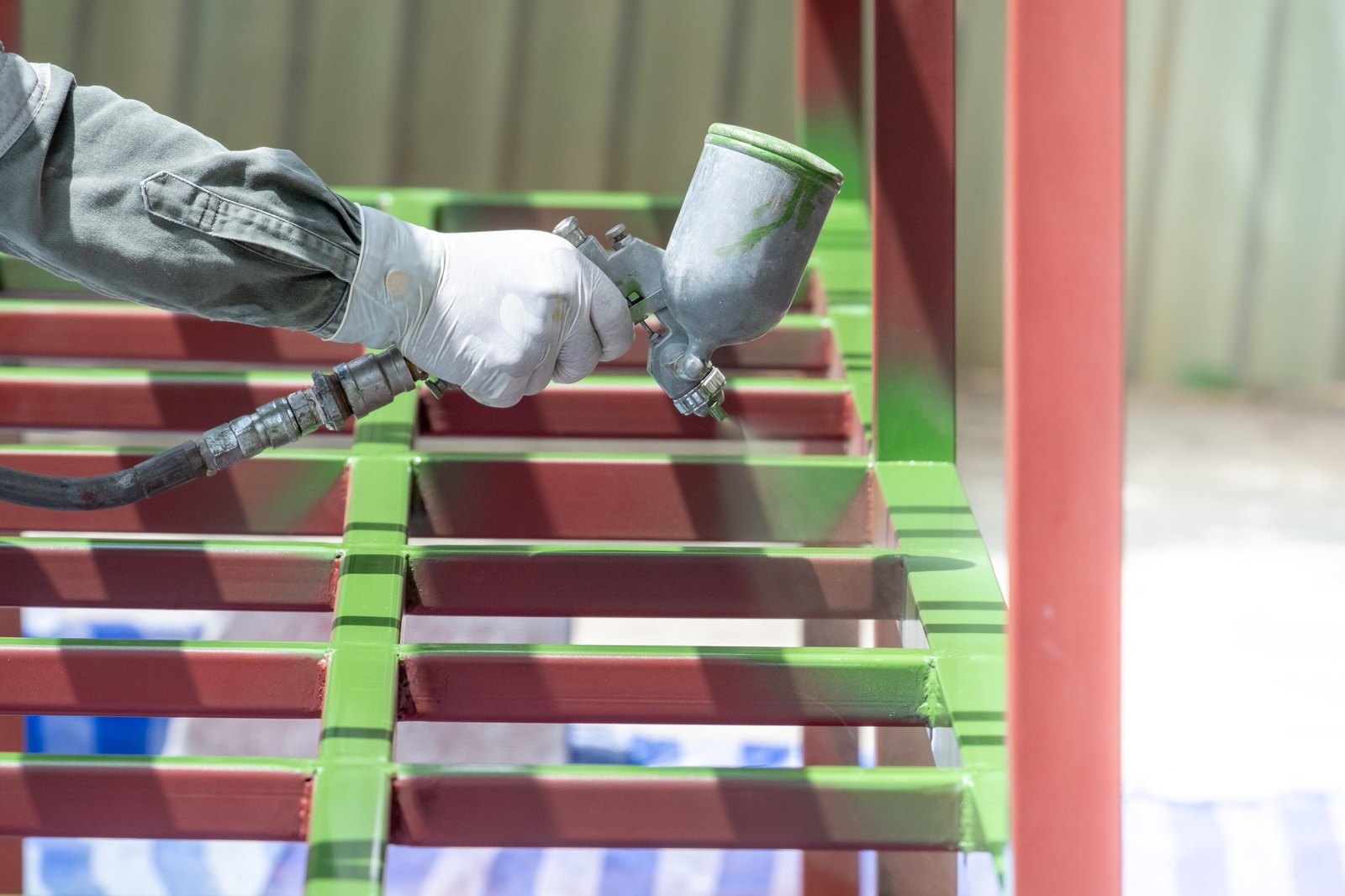
- Equipment. Spray, roll, brush or dip. HVLP or conventional spray: 0.009 to 0.021 in tip, 45 to 55 psi air and 10 psi fluid, 3/8 in ID fluid hose no longer than 50 ft, dual-regulated pot at gun height. Airless or air-assisted airless: 0.015 to 0.035 in tip, 1,800 to 2,500 psi, 3/8 in ID hose (a 1/4 in whip is fine) no longer than 100 ft.
- Film build. The data sheet recommends 2 to 3 mils (50 to 75 µm) dry; the current data sheet gives 4.9 to 7.3 mils wet for that film. Theoretical coverage is 658 sq ft per gallon at 1.0 mil DFT.
- Drying. Dry to touch in 30 to 60 minutes and dry to handle in 1 to 2 hours at ambient conditions; force-dry 15 to 20 minutes at 150 °F (65 °C) if needed. Full cure takes 3 to 7 days. No recoat is specified.
- Handling and welding. The dry film is non-tacky, so parts can be handled, stacked and shipped without picking up dirt, and welded without stripping the weld prep.
- Cleanup. Clean tools with water while the coating is wet; once dry use butyl cellosolve or MIBK, following the solvent manufacturer’s safety directions.
- Removal. For a film at the recommended 2 to 3 mil DFT: spray the surface generously with VpCI-414 at 60 % in water (the coating-removal strength on the VpCI-414 data sheet), let it sit 10 to 15 minutes, then power-wash at 115 to 160 °F (46 to 71 °C) and 50 to 300 psi. Repeat until the coating is gone. The brochure also lists plain hot water or an alkaline cleaner as removal methods for VpCI-391.
- Storage. Keep the container sealed, do not let it freeze, and do not store above 100 °F (38 °C).
- See the Cortec coatings application guides and comparison table for the shared spray, prep and storage instructions across the Cortec coating range.
Where it fits in the Cortec line
VpCI-391 is one of Cortec’s four top-selling temporary coatings with VpCI-389, VpCI-368 and VpCI-369. Pick 391 over 389 when the part will be handled, machined or welded before the coating comes off; the 389 film is waxy and slightly tacky, the 391 film dry and hazy. If the coating is meant to stay on permanently, the weldable water-based topcoat is VpCI-386. The remover is VpCI-414. For rusted steel, clean first with VpCI-422 or VpCI-426 rust remover, or convert the rust in place with CorrVerter. Browse the full Cortec VpCI line.
Field notes
A grain and fertilizer terminal operator on the Ohio River found loaders moving deicing salt and fertilizer looked ten years old after one year and were replaced every 2 to 3 years. Once a year each loader is power-washed with an alkaline cleaner to neutralize the salts, dried and oversprayed with VpCI-391 everywhere except the glass. The program has run a decade with no permits needed for the low-VOC coating. (Cortec Case History #735)
A Southeastern U.S. construction-equipment maker had loaders and skid steers sitting outside 6 to 12 months around dealer shipment, and the old oily rust preventive stayed sticky, collected dirt and could wash off. After testing VpCI-391 on fiberglass cabs and paint from about 2017, it goes on unpainted parts, bolt heads, hydraulic boxes, rims and tubing; no appearance complaints, and most dealers leave it on. (Cortec Case History #776)
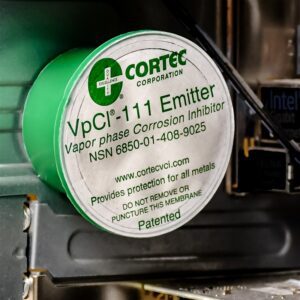
A U.S. Air Force base in Japan preserved about 20 million dollars’ worth of airfield damage-repair vehicles parked in an open field: VpCI-415 pressure wash, VpCI-369 D on hinges, ElectriCorr VpCI-239 on electricals, VpCI-105 and VpCI-111 emitters in cabs and fuse boxes, VpCI-391 in engine compartments, VpCI-386 CMA over the paint and VpCI-705 in the fuel. Other Pacific bases asked to copy it. (Cortec Case History #557)
Specifications
| Salt spray (ASTM B117) | 250 hours |
|---|---|
| Humidity (ASTM D1748) | 1,400 hours |
| VOC (ASTM D3960) | 0.4 lbs/gal (48 g/L) |
| Coverage | 658 sq.ft/gal @ 1.0 mil DFT |
| Recommended DFT | 2–3 mils (50–75 µm) |
| Film | Hazy, dry, non-tacky |
| Removal | Use a VpCI-41x series alkaline cleaner/degreaser |
| Type | Water-based removable (temporary) coating |
| Volume solids | 41% |
| Recommended WFT | 4.9–7.3 mils (124–185 µm) for 2–3 mils DFT |
| Viscosity | 1,000–7,000 cP |
| Weight per gallon | 8.4 lb (1.00 kg/L) |
| Flash point | 212 °F (100 °C) |
| Dilution | Water, up to 10% by volume to adjust viscosity |
| Dry to touch / dry to handle | 30–60 min / 1–2 hr |
| Force dry | 15–20 min at 150 °F (65 °C) |
| Full cure | 3–7 days |
| Weldable | Can be welded without removing the coating |
| Colors | Available in different colors |
| Surface preparation | Clean and contaminant-free; NACE No. 3 / SSPC-SP6 on structural steel |
| Application temperature | 45–90 °F (7–32 °C), surface 5 °F above dew point |
| Metals | Carbon steel, stainless steel, cast iron, aluminum, galvanized steel, copper, brass, solder |
| Consultation guide rating | 4 – outside, uncovered storage |
| Removal procedure | VpCI-414 at 60% for coating removal, let stand 10–15 min, then power wash at 50–300 psi and 115–160 °F (46–71 °C); or hot water |
| Storage | Original packaging, indoors, out of direct sunlight, 40–100 °F (4–38 °C) |
| Shelf life | 2 years |
| Size | 55 Gallon Drum |
| Shipping weight | 503 lb (228 kg) |
| Availability | In stock |
| Cortec product number | 12302539 |
Solvent Recycling Systems is an authorized Cortec® distributor. See the full Cortec VpCI line, browse the VpCI product selection guide, or contact us for volume pricing and lead times.


Reviews
There are no reviews yet.