

Aqueous Parts Washers
Showing 1–24 of 76 results
-

150-Gallon Aqueous Agitation Parts Washer — Industrial Immersion Cleaning System
$17,800.00 -

32-Gallon Aqueous Parts Washer
$4,375.00 -
40-Gallon Aqueous Parts Washer
$4,854.00 -
60-Gallon Aqueous Parts Washer
$5,568.00 -

E100M Manual Water-Based Spray Gun Cleaner
$3,738.00 -

E300A Manual/Automatic Water-based Spray Gun Cleaner
$5,187.00 -
E50M Manual Water-Based Spray Gun Cleaner
$2,751.00 -
E800A Manual/Automatic Water-based Spray Gun Cleaner
$9,716.00 -
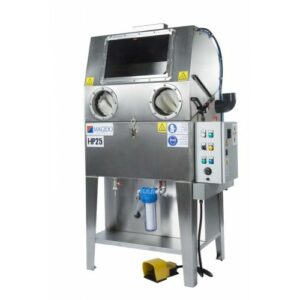
HP-25 Manual High-Pressure Cleaning Cabinet
Request a Quote -
HP-30 Glove Box Washer
Request a Quote -
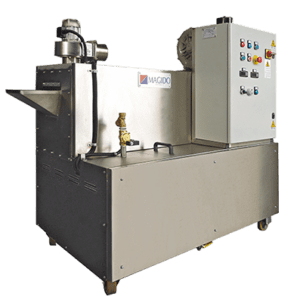
J-Series Rotary Drum Parts Washer
Request a Quote -
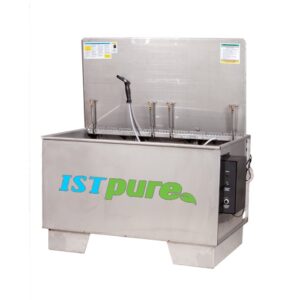
Kresco AW Series Aqueous Cleaning Tubs
Request a Quote -
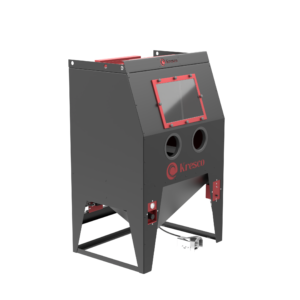
Kresco CleanBlast Series Suction Sandblast Cabinets – 4 Sizes to 48″ x 48″ with Cyclonic Reclaimer
Request a Quote -
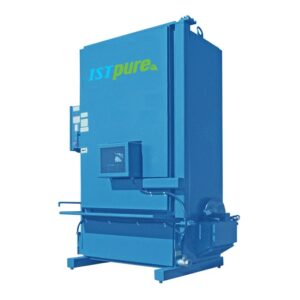
Kresco F Series High-Throughput Jet Aqueous Parts Washer
Request a Quote -
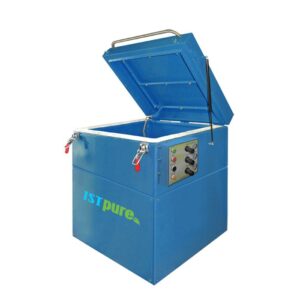
Kresco PW Series Pail & Bucket Washers
Request a Quote -
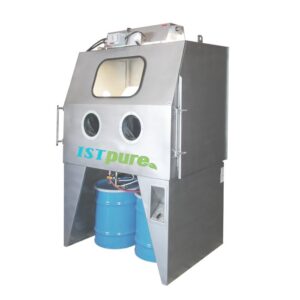
Kresco SMW Series Solvent Manual Parts Washers
Request a Quote -
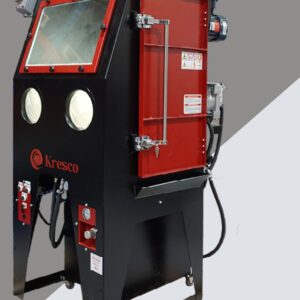
Kresco SWC Series Solvent Glove Box Washer – Class I Div. 1 Explosion-Proof Cabinet
Request a Quote -
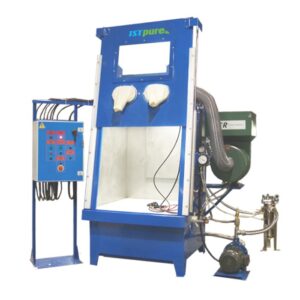
Kresco WAW Series Automated Aqueous Parts Washers
Request a Quote -
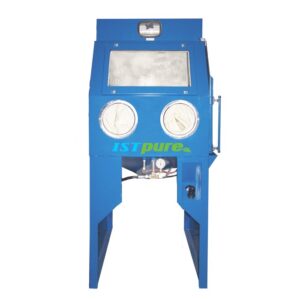
Kresco WMW Series Aqueous Manual Parts Washers
Request a Quote -
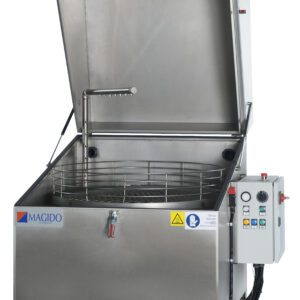
L-101 Aqueous Spray Jet Washer
Request a Quote -
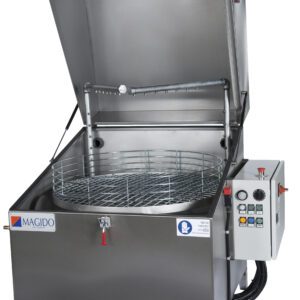
L-102 Aqueous Spray Wash Cabinet | High-Capacity Rotary Parts Washer
Request a Quote -
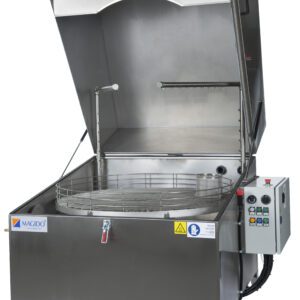
L-122 Spray Wash Cabinet
Request a Quote -

L-123 Aqueous Parts Washer
Request a Quote -

L-152 Spray Wash Cabinet
Request a Quote
Request a Quote & Lead Time
Talk to a Parts-Washer Expert
Built to order for your throughput. Tell us what parts you’re cleaning and how many, and we’ll recommend the right washer — solvent or aqueous — with lead time and freight.
Aqueous (Water-Based) Parts Washers
Aqueous parts washers clean with heated, water-based detergent instead of solvent — a low-VOC, worker-safe way to remove oil, grease, coolant, and particulate. They’re the go-to when you need to meet emissions limits or move away from solvent cleaning.
We carry a full range: spray cabinet washers for hands-free, high-volume cleaning, immersion and platform-agitation washers for intricate parts, high-pressure glove-box washers for manual precision work, plus in-line conveyor and rotary systems for production lines.
Not sure whether aqueous or solvent cleaning is right for you? It comes down to your soils, parts, and regulations — tell us what you clean and how much, and we’ll size the right washer. Request a quote or call (847) 833-7010.
Choose by machine type
Parts washer cabinets — enclosed spray wash with a rotating turntable. The most common automatic configuration.
Top load parts washers — loaded from above by hoist or crane, for heavy and awkward parts.
Front load parts washers — floor-level loading where there is no overhead lift.
Rotary drum parts washers — continuous tumbling for high volumes of small parts.
Conveyor parts washers — belt-fed wash, rinse and blow-off for production lines.
Immersion washers with agitation — heated soak with movement, for baked-on soils that spray alone will not lift.
High-pressure glove box washers — operator-directed high-pressure cleaning inside a sealed cabinet.
Manual parts washers — the right answer at low volume, and cheaper to run.
New to this equipment? Start with our guides to automatic parts washers — including when a manual machine is the better buy — and heated parts washers, which covers temperature by soil type and controlling flash rust.
Not sure which parts washer fits your parts?
Our Aqueous Parts Washer Buyer’s Guide walks through aqueous vs. solvent cleaning, sizing by part envelope and turntable load, heat and detergent selection, oil skimming and bath management, and where Build-All and Magido jet-spray washers and ultrasonic cleaning each fit.
Aqueous parts washer FAQs
What is an aqueous parts washer?
An aqueous parts washer cleans with water and detergent instead of solvent, usually heated, using spray, immersion, agitation or ultrasonic action.
Aqueous or solvent parts washer?
Aqueous washers eliminate solvent purchases, flammability and solvent waste and handle a wide range of soils, but they need heat and parts must dry. Solvent washers work at room temperature and parts dry fast, which suits light-volume degreasing.
What detergent goes in an aqueous parts washer?
Use a detergent made for your washer type. Spray cabinets need low-foaming detergent; immersion and ultrasonic tanks have their own formulations. Match it to your metals and soil.
Will parts rust after aqueous cleaning?
Bare steel can flash rust as it dries. Use a detergent with rust inhibitor or add one to the rinse, and protect parts that will sit with a rust preventative or VCI bags.
What do you do with aqueous parts washer wastewater?
Spent wash water must be handled according to local rules. Oil skimmers and filtration extend bath life so you change and dispose of it far less often.Draining and refilling wash solution? A polypropylene or aluminum air-operated diaphragm pump moves aqueous cleaner, rinse water and sludge between the washer and drums or totes.
