
Description
The VpCI®-132 antistatic foam pad is the large format of Cortec’s VpCI-130 series: a 10″ × 10″ × ¼″ polyurethane pad impregnated with vapor-phase corrosion inhibitor that protects up to 8 ft³ (0.23 m³) of enclosed space. Drop one into a carton, crate or shrink-wrapped assembly and it does three jobs at once: it emits VpCI, it absorbs moisture, and it dissipates static to MIL-PRF-81705D, so it is safe around electronics and circuit boards.
The foam carries roughly ten times more VpCI per square foot than a VCI paper or film, which is what lets one pad protect a large void or a coil face. It is nitrite- and chromate-free and protects aluminum, galvanized steel, brass, solder, carbon steels, silver, copper and zinc, so mixed-metal assemblies and circuit boards can share one package. In the Cortec Product Consultation Guide the VpCI-130 series is rated 1, enclosed: it belongs inside a sealed bag, box, crate, shrink wrap or cabinet, not on an open rack. Used that way it replaces oil and grease dips and desiccant-only packs, and parts come out ready to use with no degreasing.
Typical applications
- Boxed assemblies, cartons and export crates
- Electronics, control components and printed circuit boards
- Machined, ground and stamped parts between operations and in storage
- Aluminum and steel coils and other large-surface-area products (VpCI-137)
- Spare-parts storage and mothballed equipment
- Seagoing containers and long-haul overseas shipments
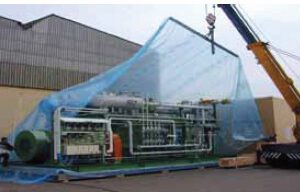
- Engine, gearbox and compressor packaging for storage and transport
- Inside VpCI-126 bags, MilCorr or VpCI-126 HP UV shrink wrap as the extra VpCI source for large voids
How to use VpCI-132
- Start with clean, dry parts. Wash off coolant, fingerprints and salts and dry completely; the foam cannot fix standing water or residue left on the metal.
- Size the dose. One VpCI-132 pad per 8 ft³ (0.23 m³) of package volume; for larger crates spread several pads so the vapor reaches every section, and use two per 8 ft³ for aggressive marine or overseas conditions. A 2′ × 2′ × 2′ carton (8 ft³) takes one pad; a 4′ × 4′ × 4′ crate (64 ft³) takes eight.
- Place it anywhere in the shared air space. Placement is not critical as long as nothing solid blocks the vapor path between foam and metal. The foam is not a cushion: pressure can wring inhibitor out and leave a residue (wipes off with water or rubbing alcohol). Use plain foam or Cor-Pak VpCI bubble wrap for shock protection.
- Close the package. Seal the VpCI-126 bag, tape the carton, or shrink the MilCorr or VpCI-126 HP UV film; Cortec specifically recommends pairing 130-series foam with VpCI-125/126 film. A sealed enclosure with minimal free air holds the VpCI concentration.
- Allow the void to saturate. The inhibitor condenses as a molecular layer on every metal surface within about a day. After shipping, keep the package closed for 24 hours after arrival so it acclimates to the building before it is opened.
- Reopen and reclose as needed. The layer is self-replenishing while the foam is inside. If a package stays open, or the enclosure is not airtight, add a fresh pad sooner.
- Return to service. Remove the part; no cleaning is required.
- Store unused foam sealed. Shelf life is 2 years in the original package; reseal opened cartons in plastic bags.
The five stock formats in the VpCI-130 series (Cortec VpCI-130 Series data sheet):
| Product | Size | Protects | Packaging |
|---|---|---|---|
| VpCI-131 | 2″ × 10″ × ¼″ pad | 1.5 ft³ (0.042 m³) per pad | 250 per carton |
| VpCI-132 | 10″ × 10″ × ¼″ pad | 8 ft³ (0.23 m³) per pad | 250 per carton |
| VpCI-133 | 1″ × 1″ × ¼″ square, adhesive back | 0.25 ft³ (7 L) per square | 1,000 per carton |
| VpCI-136 | 1″ × 1″ × ¼″ square, no adhesive | 0.25 ft³ (7 L) per square | 1,000 per carton |
| VpCI-137 | 132′ × 54″ × ¼″ roll | 10 ft³ per ft² of foam (3 m³/m²) | 1 roll per carton |
Combining with other VpCI packaging
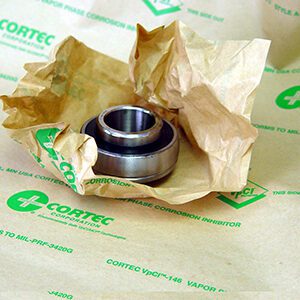
The standard Cortec system is a VpCI-126 barrier plus foam in the void: a VpCI-126 Blue bag or 126 tubing for indoor and container shipments, MilCorr shrink film or VpCI-126 HP UV with 130-series pads inside for outdoor storage, VpCI-146 paper interleaved between stacked parts, and Desicorr VpCI pouches where humidity is the driver. Parts should be clean and dry before they are packaged; see the Build-All and Magido aqueous parts washers, and where parts wait more than a day or two before packaging, VpCI-377 or BioCorr bridges the gap.
Where it fits in the Cortec line
Within the series, VpCI-131 (1.5 ft³) and VpCI-132 (8 ft³) are drop-in pads for boxes and crates; VpCI-133 (adhesive back) and VpCI-136 (plain) are 1″ squares for small packages and vertical installation; VpCI-137 is the cut-to-length roll for coils and large custom voids. VpCI-132 is the pad specified in every one of Cortec’s published UK outdoor-storage cases, because one pad covers most engine, gearbox and crane-component crates. BioPad covers the same 1.5 and 8 ft³ volumes on a thinner biobased PLA non-woven. For electrical cabinets use the self-stick VpCI-101 (1 ft³) and VpCI-111 (11 ft³) emitters or VpCI-170 foam tape; for dosing a box by count, Cor-Pak tablets and Cor-Pak 1-MUL pouches. Browse the full Cortec VpCI line or the VpCI product selection guide.
Field notes
A UK power station had three turbines already rusting under tarps in a planned 2 to 3 year outdoor storage. VpCI-132 foam pads around each turbine and VpCI-126 HP UV film shrunk over them with a propane gun gave low-cost outdoor storage for up to 3 years. (Cortec Case History #491)
A Milwaukee, Wisconsin motorcycle plant had rust in manufacturing, in international shipment of semi-assembled machines and in service-parts storage. VpCI-126 bags now line the Gaylord boxes, VpCI-146 paper interleaves the parts and VpCI-132 foam emitters complete the pack, with Cor-Pak 1-MUL pouches for long-term service parts; the program went plant-wide. (Cortec Case History #546)
A Big Three powertrain plant in Romulus, Michigan proved its build-ahead pallet recipe in a 40-foot trailer cycled at 80 to 100% humidity: ElectriCorr VpCI-238 on open connectors, a 68 by 68 inch 8 mil VpCI-126 bag per engine with two VpCI-131 foam strips, and crankshaft, head and block pallets with VpCI-126 sheets, 6 to 15 foam strips and 12 to 24 VpCI-111 cups, stretch-wrapped in Cor-Pak. (Cortec Case History #107)
Specifications
| Protects | Up to 8 cubic feet (0.23 m³) per unit |
|---|---|
| Pad size | 10″ × 10″ × ¼″ (25 × 25 × 0.64 cm) |
| Metals | Aluminum, galvanized steel, brass, solder, carbon steels, silver, copper, zinc |
| ESD | Meets MIL-PRF-81705D for static dissipative materials |
| Listings | NSN #6850-01-426-3539 |
| Note | No adhesive backing |
| Function | VpCI emitter, desiccant action and static dissipation in one material |
| Construction | Open-cell polyurethane foam impregnated with VpCI throughout (MIL-PRF-26514G Type 3 Class II foam) |
| VpCI loading | Approximately 10 times more VpCI per square foot than VCI papers and wrapping films |
| Composition | Nitrite- and chromate-free |
| Consultation guide rating | 1 – enclosed (sealed bag, box, crate, shrink wrap or cabinet) |
| Test methods | NACE TM0208-2008 (vapor inhibiting ability); NACE RP0487-2000 (selection of rust preventives) |
| Placement | Anywhere in the shared air space; not for cushioning |
| Shelf life | 2 years sealed in the original package; keep unused foam sealed in plastic bags |
| Use with | VpCI-125/126 film and bags, MilCorr or VpCI-126 HP UV shrink film |
| Size | 10″ x 10″, 250 per carton |
| Shipping weight | 15 lb (6.8 kg) |
| Availability | In stock |
| Cortec product number | 10500011 |
Solvent Recycling Systems is an authorized Cortec® distributor. See the full Cortec VpCI line, browse the VpCI product selection guide, or contact us for volume pricing and lead times.