

Description
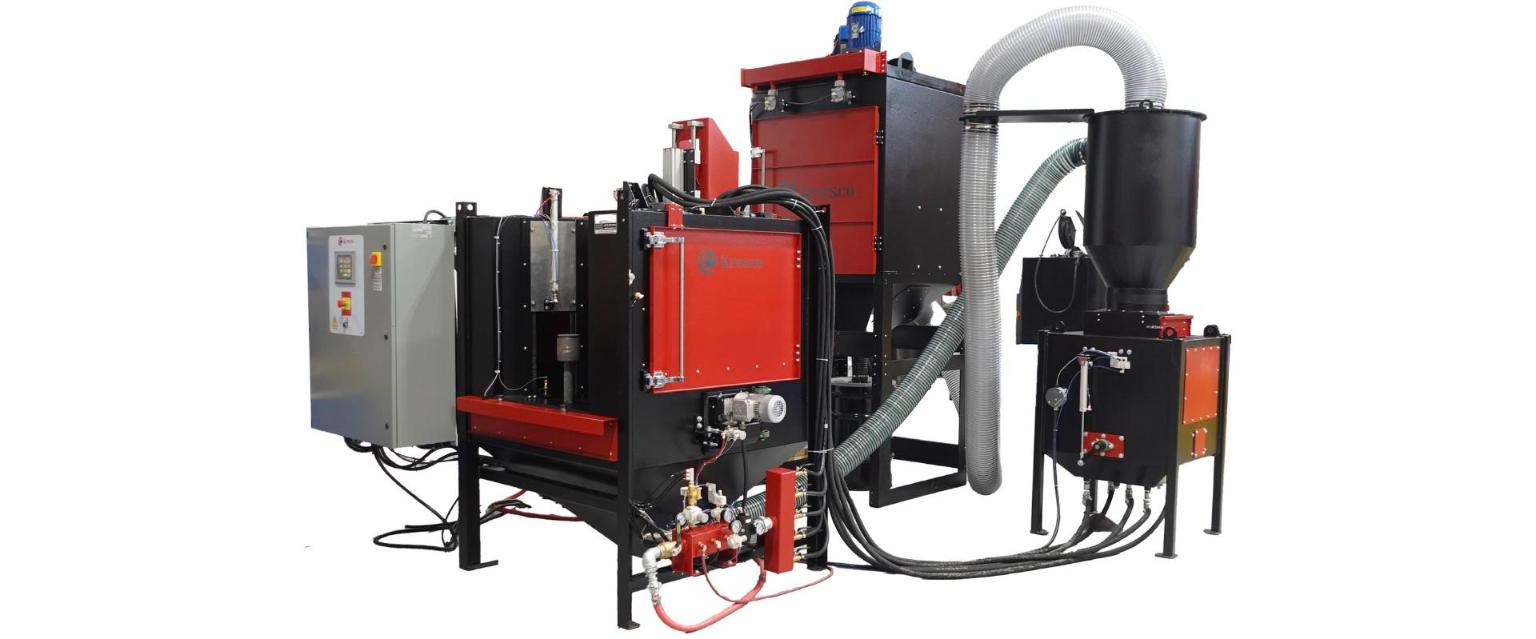
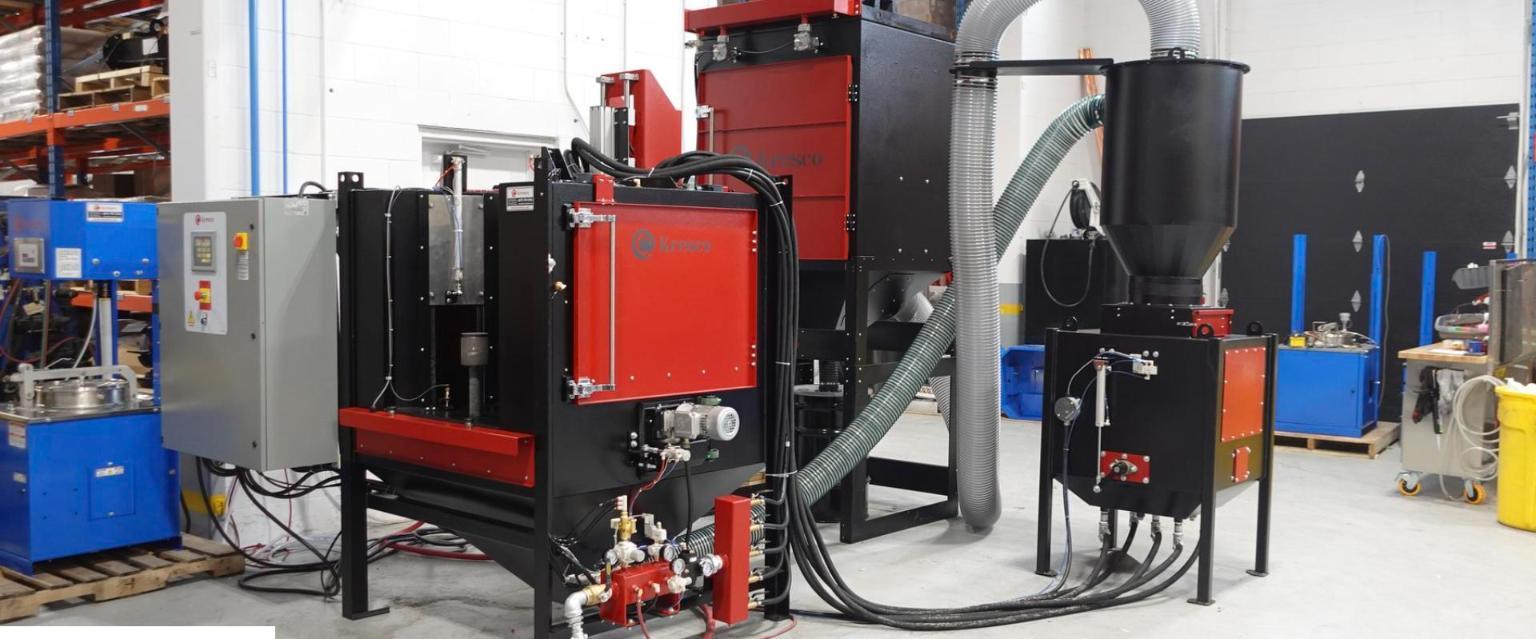
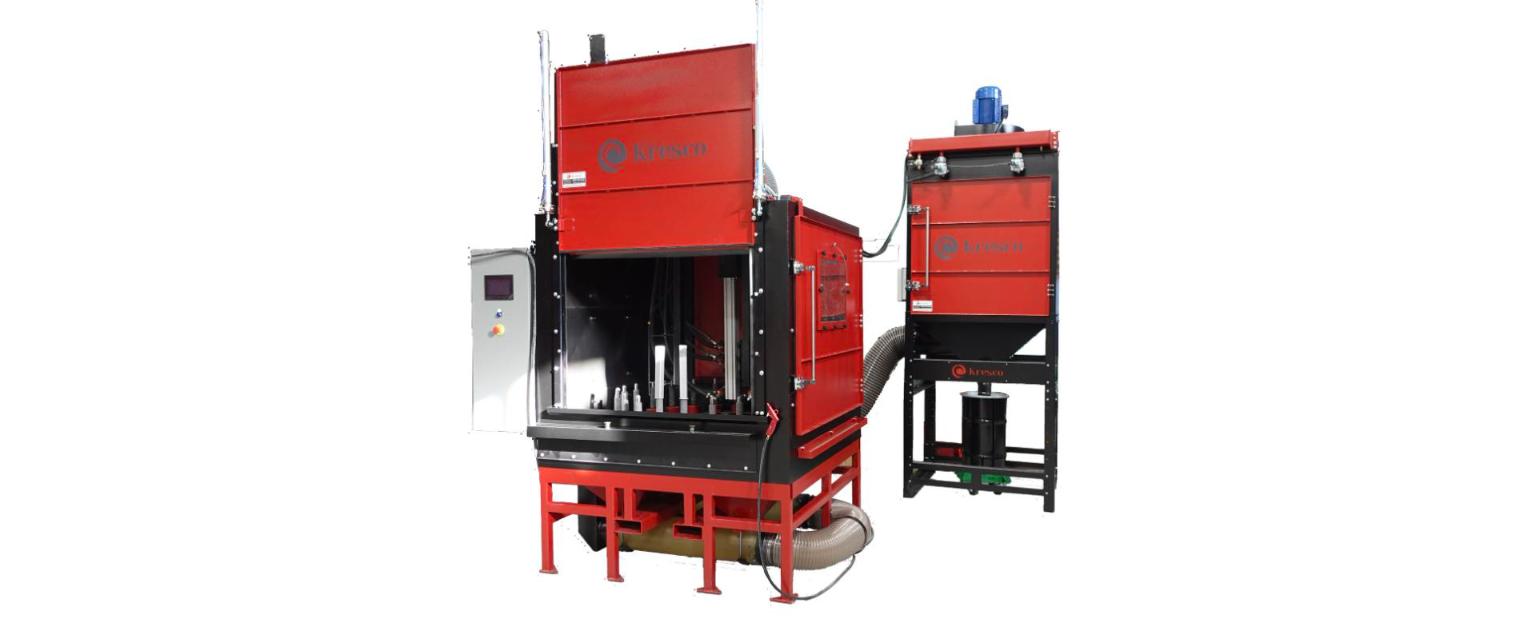
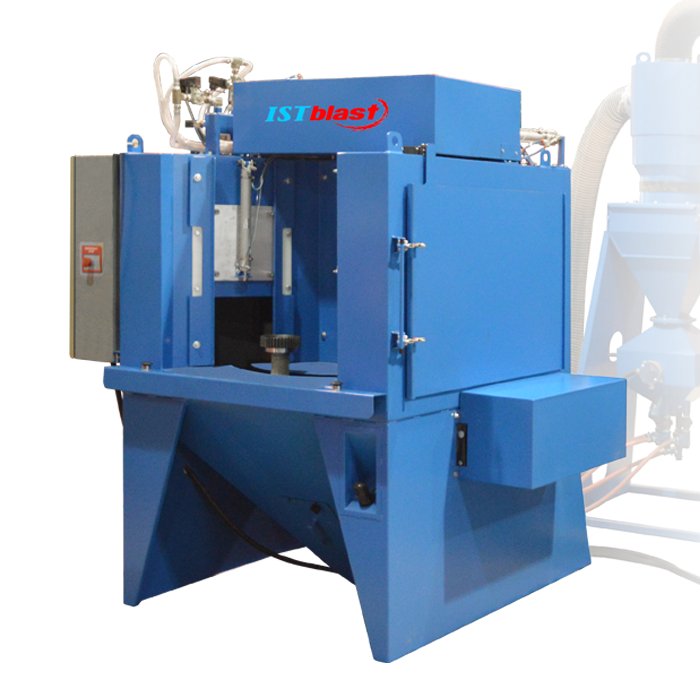
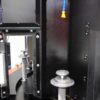
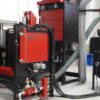
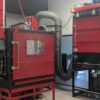
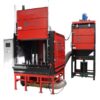
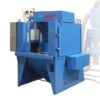
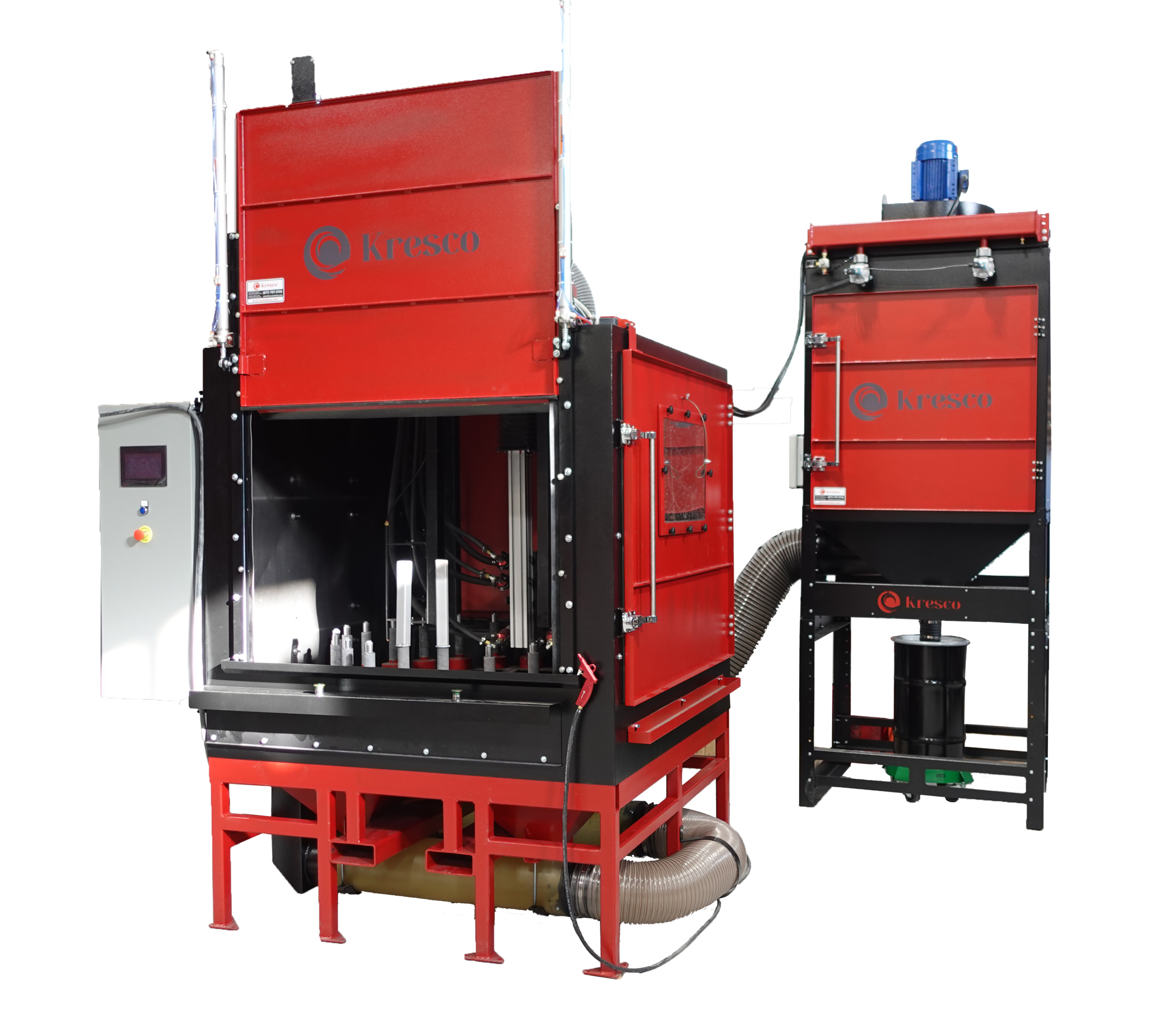
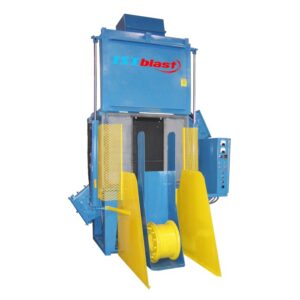
The Kresco Indexing Turntable is the automated sandblasting system for continuous production of identical small-to-medium parts with complex shapes, cavities and hard-to-reach blind spots. Parts are loaded at a single station, index through a blasting station and an air blow-off station, and come off the table ready to ship or coat. Run it continuously or cycle-on-demand, loaded by an operator or by a material-handling robot.
Common applications: castings, forgings, machined housings, valve bodies, brackets and other repeat parts where a hand-held nozzle misses pockets and an inline conveyor can’t spin the part. The turntable integrates cleanly into automated cells that already use robotic arms to move parts down the line.
Request a quote or call (847) 833-7010. Send a part drawing, target parts-per-hour and your compressor capacity — Kresco test-blasts sample parts to lock in the satellite and nozzle configuration before you buy.
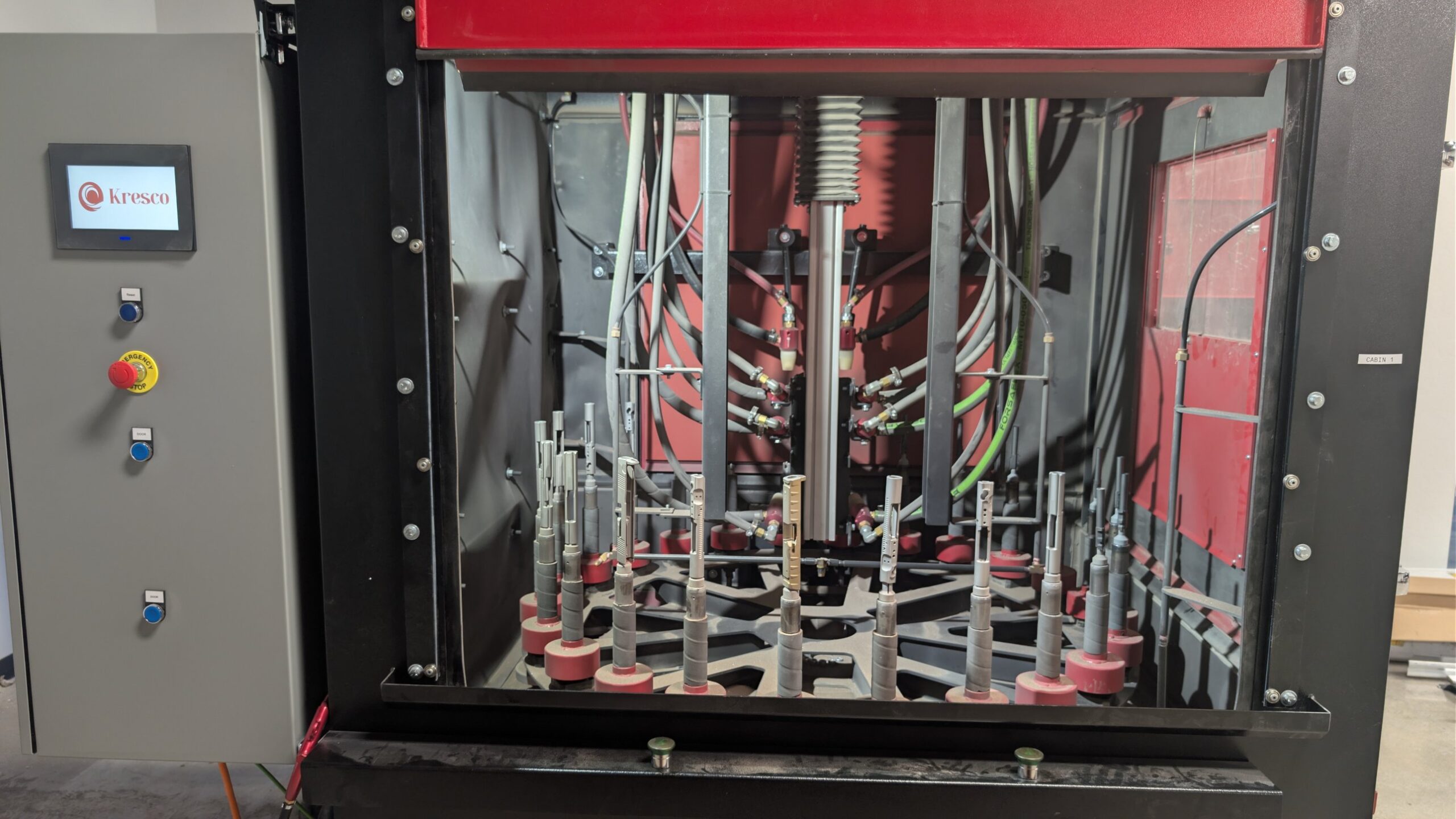
How It Works: Four Stations
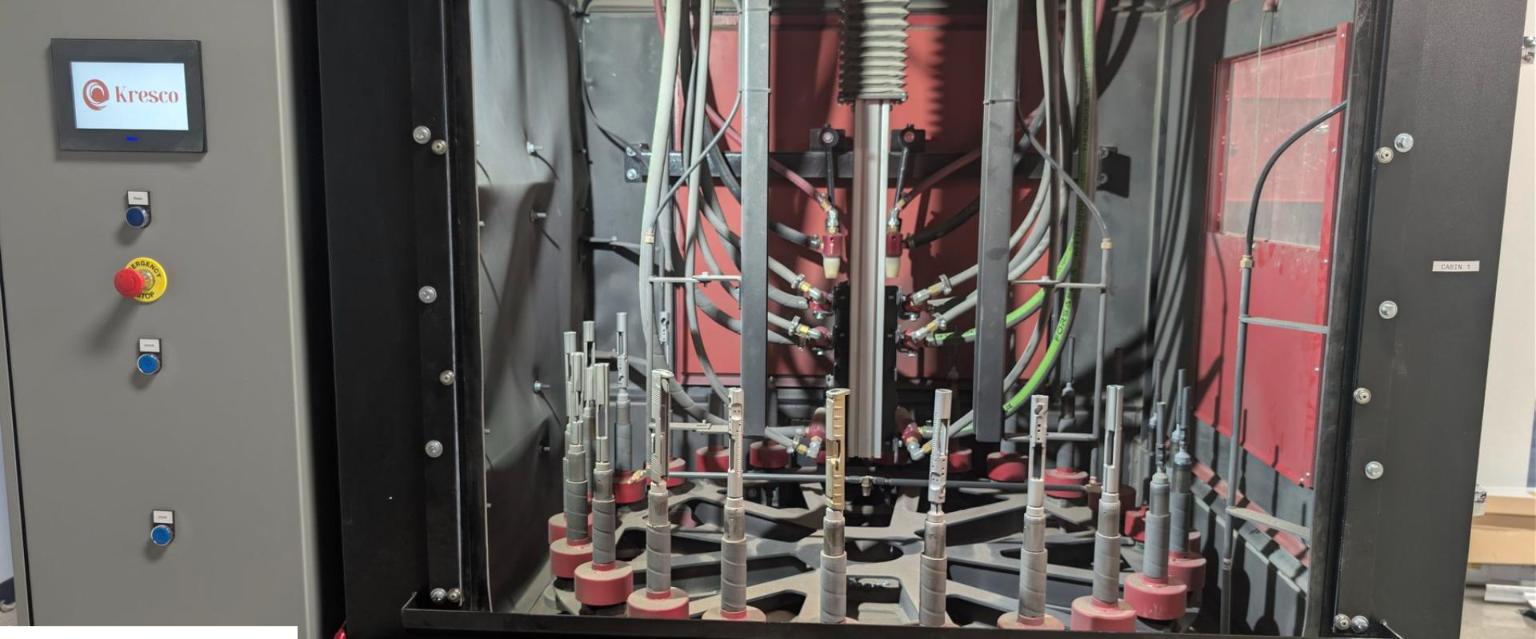
- Loading / unloading station — the operator or robot removes finished parts and mounts fresh ones on a satellite support.
- Waiting station — acts as a dust barrier between the operator and the blast zone.
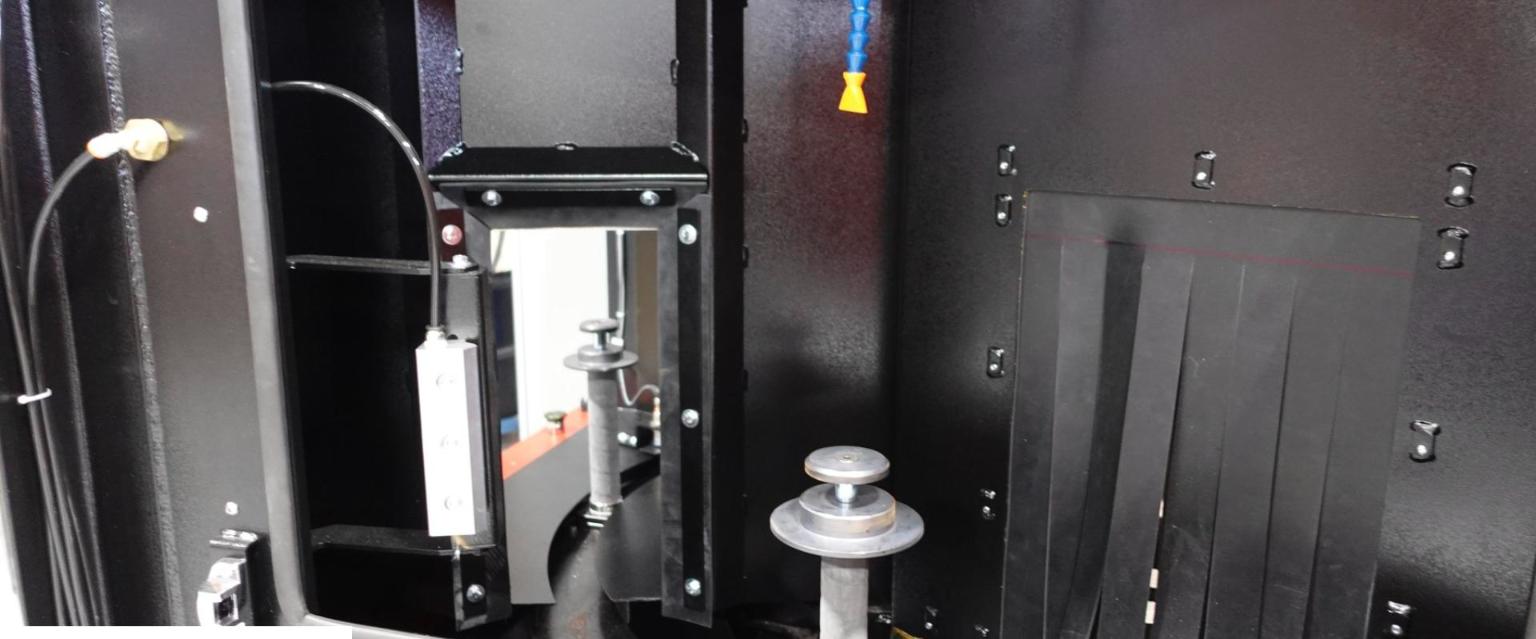
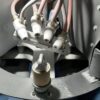
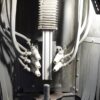
- Sandblasting station — the satellites spin while the nozzle bank blasts; interior and exterior surfaces can usually both be covered.
- Air cleaning station — blow-off nozzles strip residual dust before the part returns to the operator.
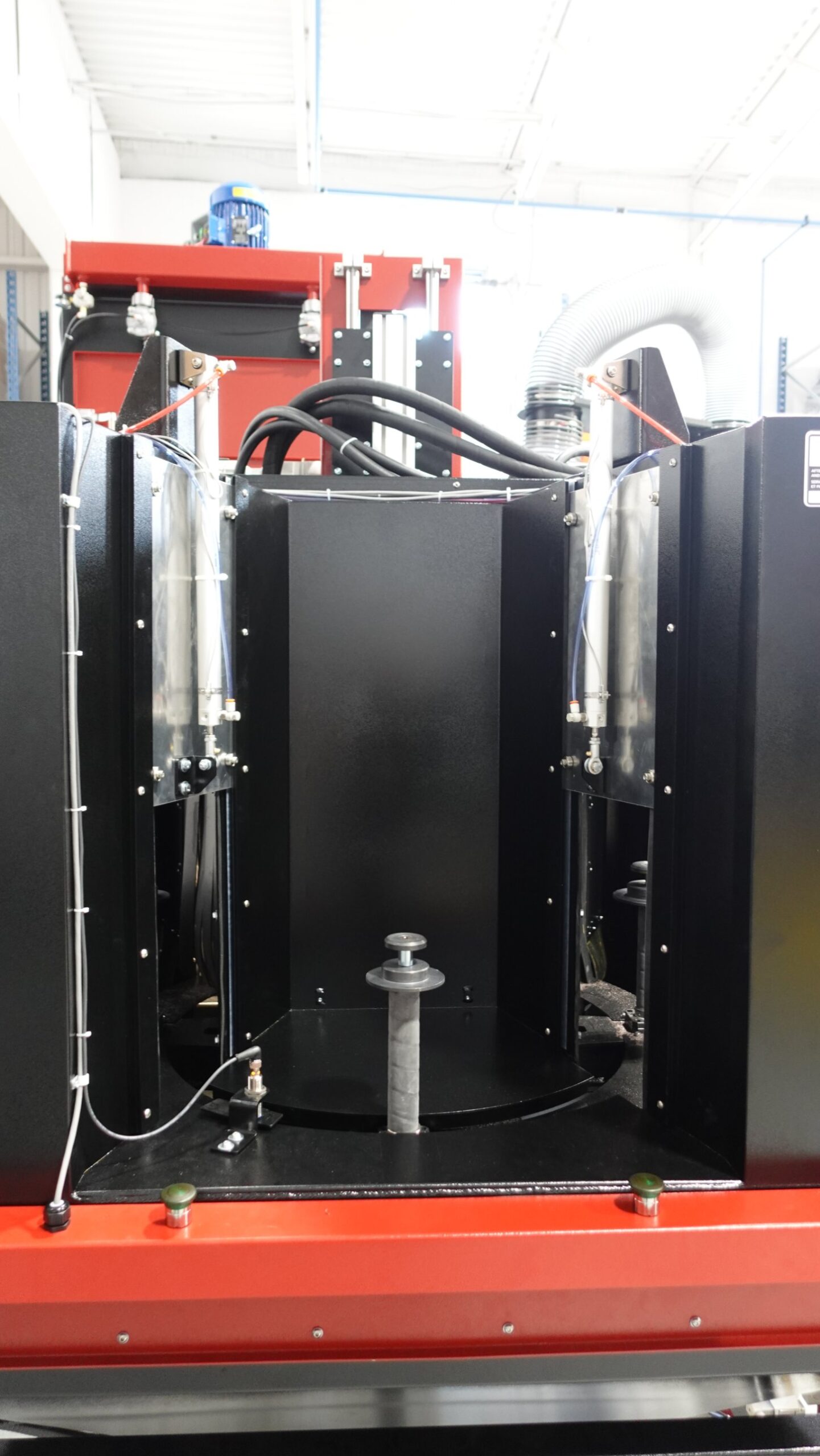
Custom Design: Satellites and Nozzles
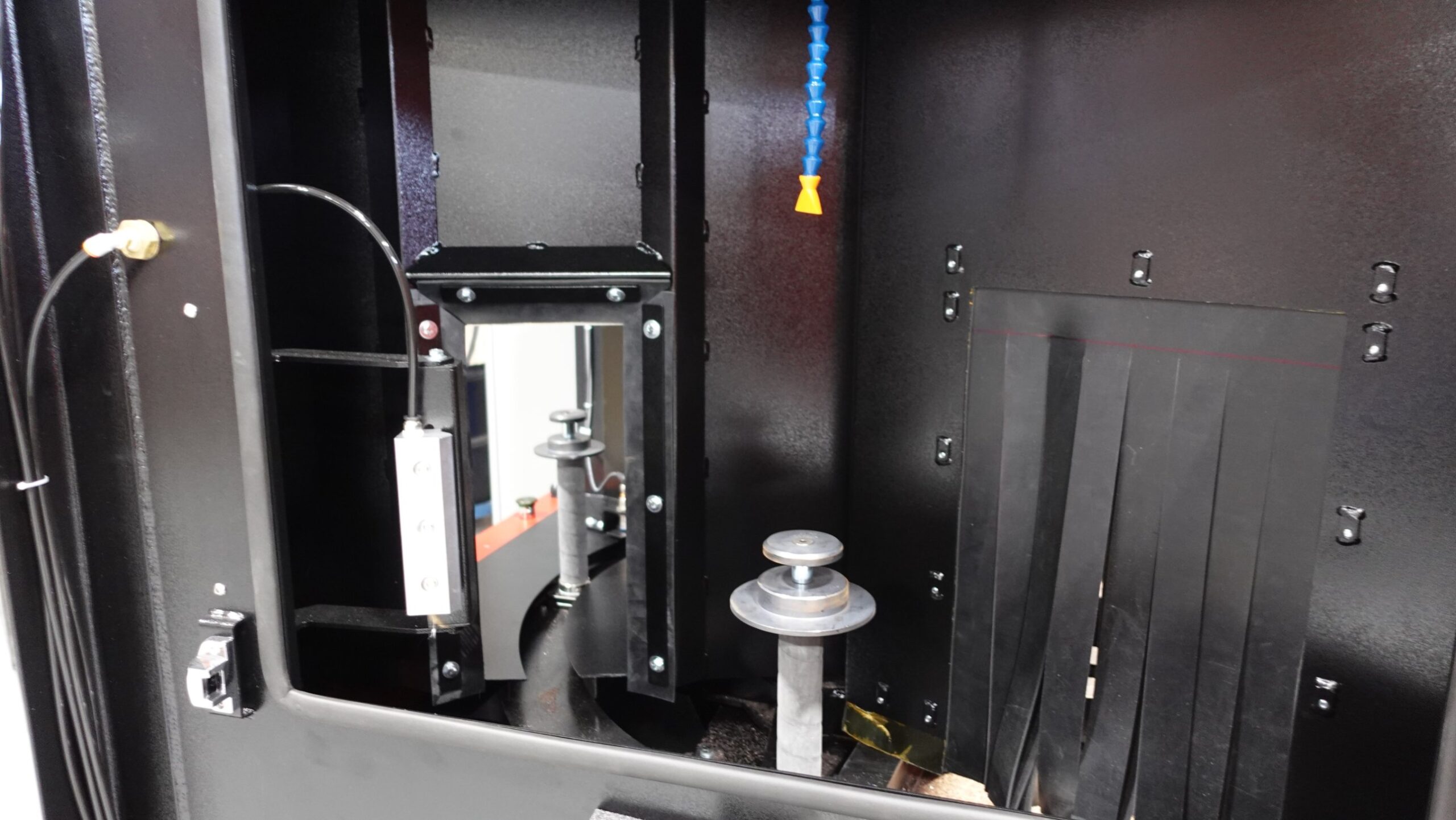
Every turntable is tailored to the part and the output you need. The usual design levers:
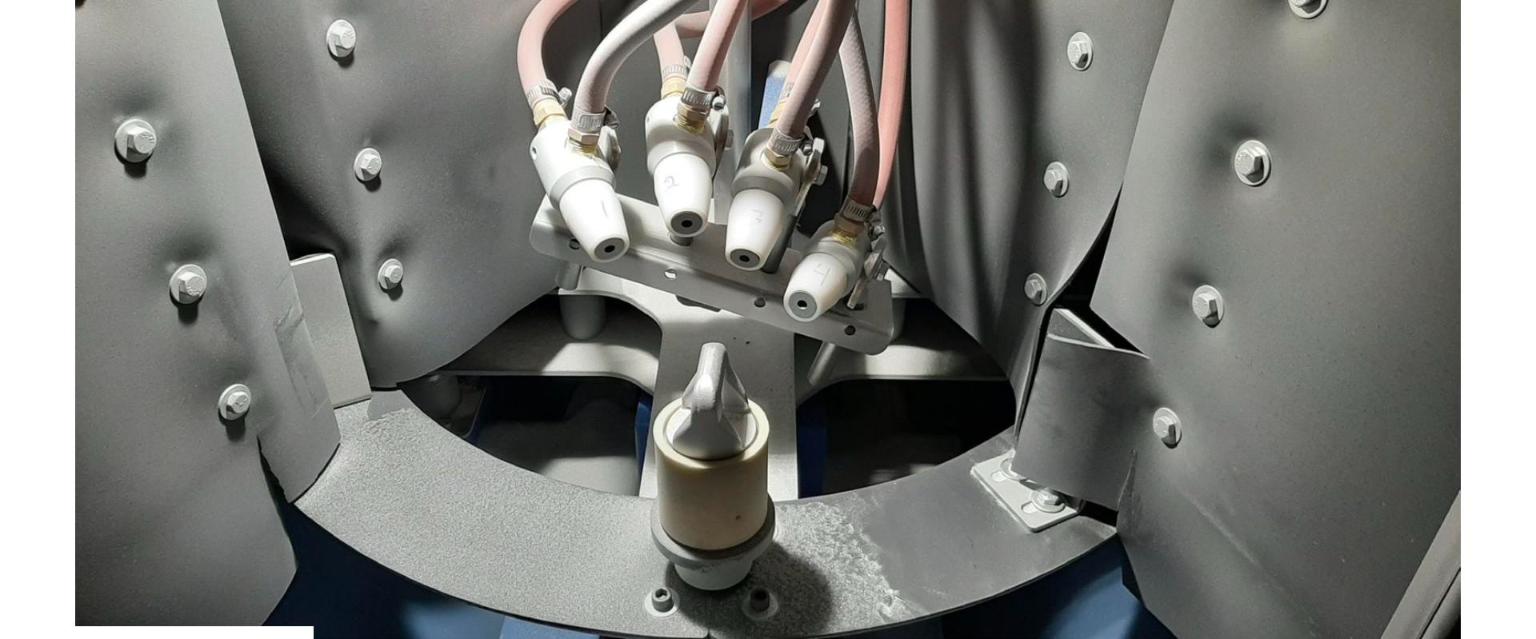
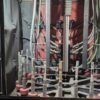
- Up to 3 blast satellites per station (more for larger or more complex parts). Each satellite spins on its own axis so every surface of the part sees the blast stream.
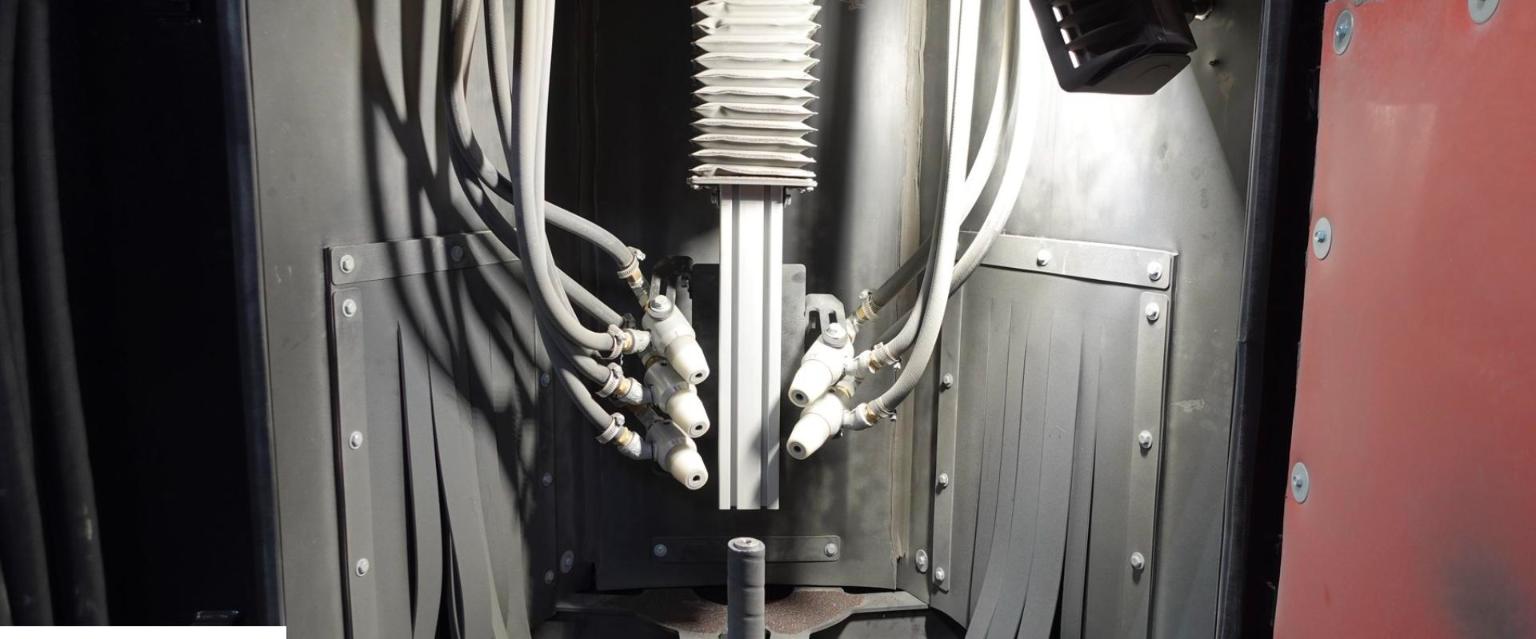
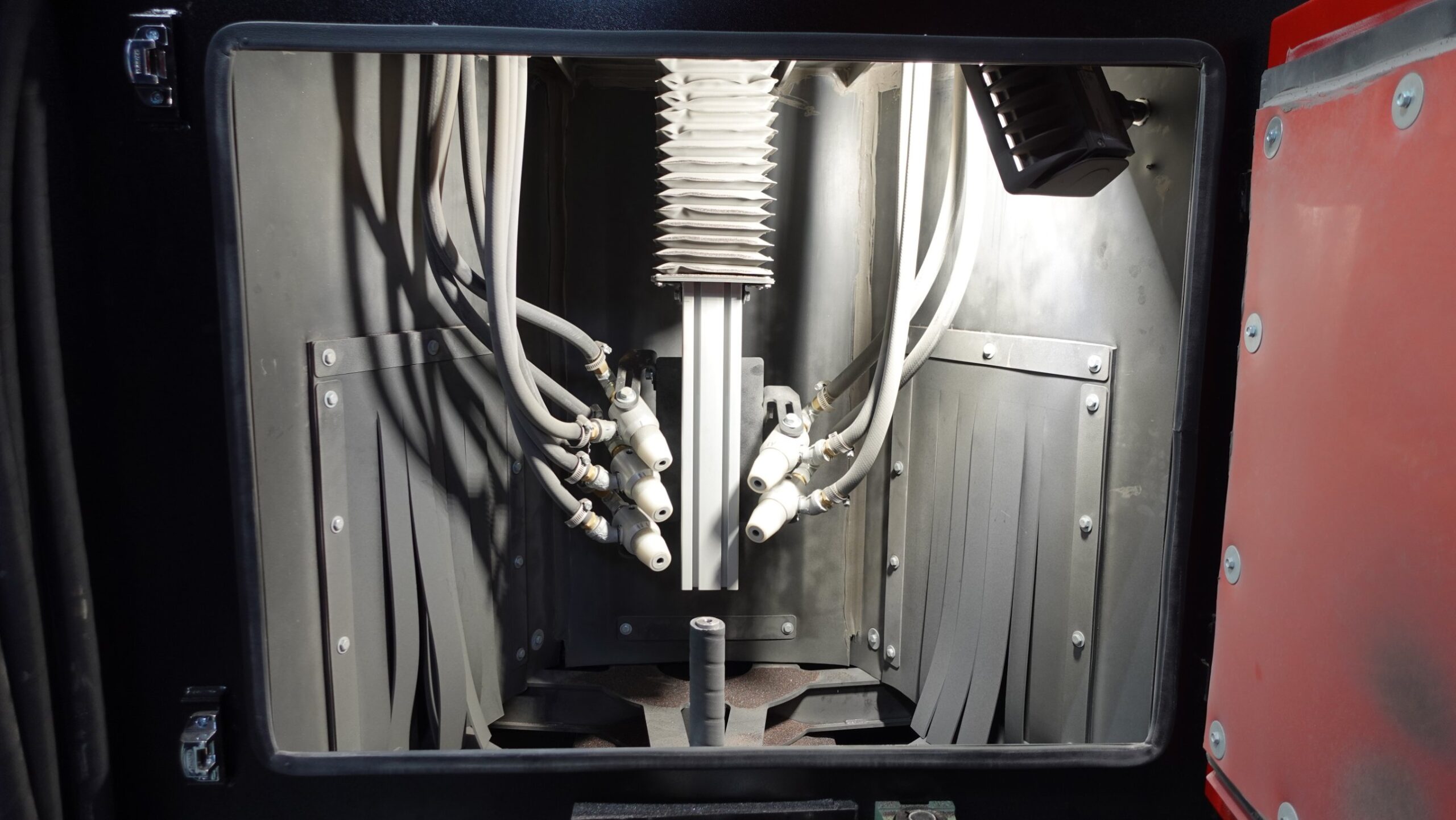
- Nozzles fixed or moving on a vertical and/or horizontal axis, depending on part size, complexity and the areas that need coverage.
- Output is set by the number of satellites per station × parts per satellite × nozzles per satellite × exposure time. Adding nozzles speeds the cycle but raises compressed-air demand.
Typical configurations Kresco builds: four fixed nozzles on a single rotating satellite; three fixed nozzles over triple rotating satellites on a rotating tray; five nozzles oscillating on a vertical axis over a single rotating satellite.
Sizing the System
What drives throughput: the application (blast cleaning, surface prep, descaling), the abrasive (hardness, density, recyclability), part complexity, part material (steel, aluminum, plastic, forged) and coverage (exterior only vs. interior and exterior).
What you can tune: satellite/nozzle layout, satellites per station, parts per satellite, nozzle count, pressure at the nozzle, nozzle motion, process time, satellite rotation speed, and manual vs. robotic loading.
Compressed air: figure roughly 40 CFM per blast nozzle plus 10 CFM per blow-off station. Example from Kresco: two satellites per station (two blow-off stations) with four 5/16″ ID nozzles per station at 80 PSI consumes about 340 CFM. Nozzle ID and working pressure set the exact number.
What’s Included
- PLC with HMI touch screen — main operating screen, alarm screen with live and resolved history, password-protected manual screen for maintenance, and integrated maintenance reminders.
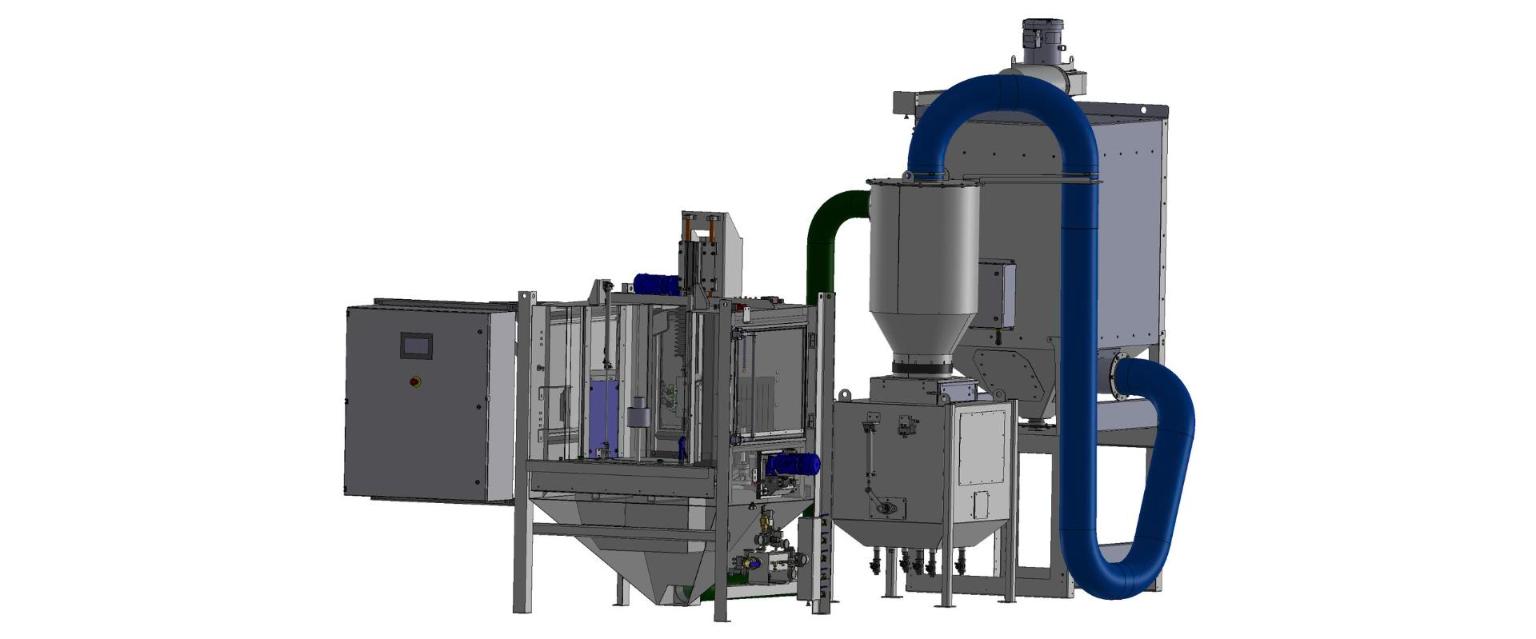
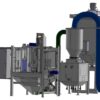
- Cyclonic media recovery — tunable separator with adjustable air inlet that handles angular or spherical media across materials, grain sizes and bulk densities; stand-alone support for flexible floor layout.
- Self-cleaning cartridge dust collector sized to the cabinet.
- Optional robotic loading/unloading, custom hopper capacities and multi-nozzle manifolds.
Media Recovery System Specifications
| RB16 | RB24 | RB30 | |
|---|---|---|---|
| Body diameter | 16″ | 24″ | 30″ |
| Air flow | 900 CFM | 1,200 CFM | 1,800 CFM |
| Inlet ID | 5″ / 6″ | 6″ / 7″ | 7″ / 8″ |
| Outlet ID | 7″ | 8″ | 8″ |
| Storage hopper | Custom to each order, based on application and production target | ||
Cartridge Dust Collector Options
| CDC900 | CDC1200 | CDC1800 | |
|---|---|---|---|
| Motor | 2 HP | 3 HP | 5 HP |
| Fan | 900 CFM | 1,200 CFM | 1,800 CFM |
| Filter cartridges | 2 | 4 | 4 |
| Filter area | 636 sq ft | 1,272 sq ft | 1,272 sq ft |
| Overall dimensions (L×W×H) | 48″ × 23″ × 120″ | 48″ × 45″ × 124″ | 48″ × 45″ × 124″ |
| Shipping height* | 90″ | 94″ | 94″ |
| Fan noise (with muffler) | Under 80 dB | ||
*Adjustable legs assembled on site.
Installed Systems
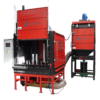
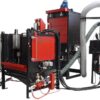
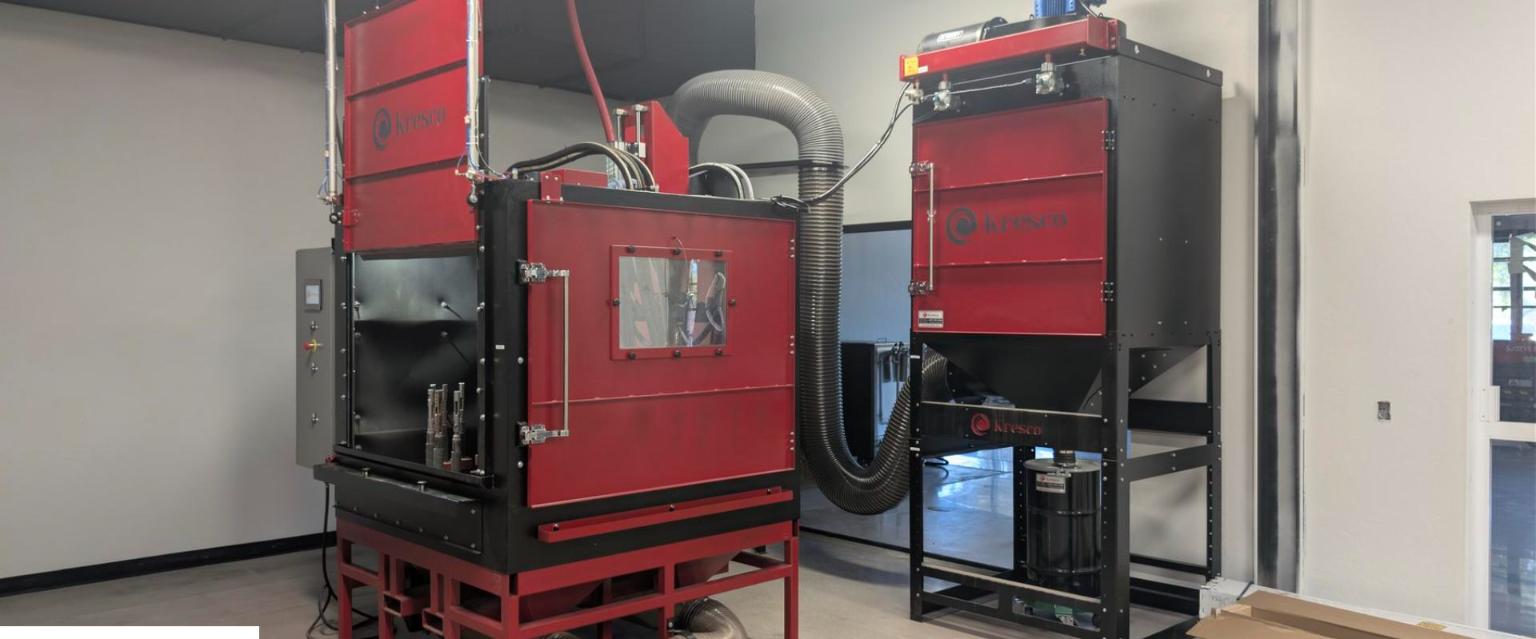
Kresco indexing turntables run in production at manufacturers across North America. Two recent installations:
Watch It in Action
Is This the Right Machine?
- Repeat parts with cavities and blind spots, steady volume → Indexing Turntable.
- Mixed parts, lower volume, manual nozzle → a rotary table blaster.
- Small parts in bulk, no fixturing → Basket Blaster or inline basket blaster.
- Long or flat parts on a conveyor → pass-through inline conveyor system.
- Parts too big for any cabinet → a blast room, with or without a robot.
Choosing an abrasive? See the blast media chart. Considering a robot cell instead? Read our guide to industrial sandblasting robots.
Part of your finishing line: Abrasive blasting is step one of surface prep. Once parts move to paint, keep spray guns clean with a spray gun washer and reclaim your cleaning solvent with a solvent recycler. See how it all connects in From Blasting to Painting.
Built to order by Kresco in Quebec, Canada. Sold, installed and supported in the U.S. by Solvent Recycling Systems.

Reviews
There are no reviews yet.