

Solvent Recyclers
Showing all 7 results
-
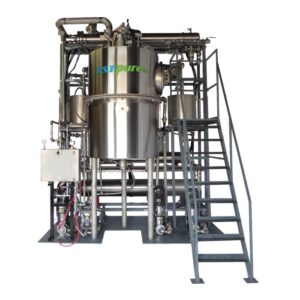
Kresco SRC Series Continuous-Flow Solvent Recyclers – 3 to 100 GPH Continuous Solvent Distillation
Request a Quote -
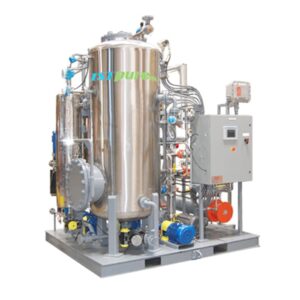
Kresco SRXC Distillation Columns
Request a Quote -

SR120 Solvent Recycler – 30-Gallon Class I Div I Solvent Reclaim System
Request a Quote -
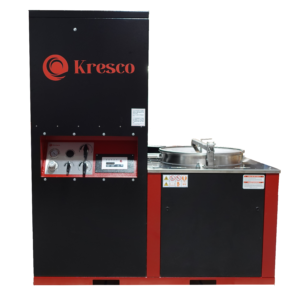
SR180 Solvent Recycler – 48 Gallon
Request a Quote -

SR240 Solvent Recycler – 64 Gallon Class I Div I Solvent Reclaim System
Request a Quote -
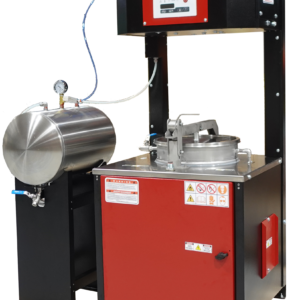
SR30V Solvent Recycler – 8 Gallon Class I Div I Solvent Reclaim System
Request a Quote -
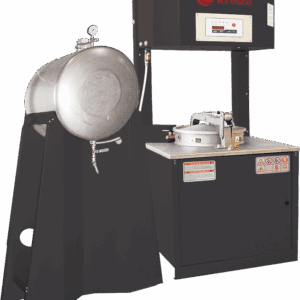
SR60V Solvent Recycler – 15 Gallon Class I Div I Solvent Reclaim System
Request a Quote
Industrial Solvent Recyclers
A solvent recycler distills dirty solvent back into clean, reusable solvent right in your shop. Shops use them on spent acetone, MEK, mineral spirits, lacquer thinner and gun wash. Load the dirty solvent, run a cycle, and draw off clean solvent. What’s left is a small bag of dry solids instead of drums of liquid waste. Fewer drums leave your dock, you buy less solvent, and your hazardous waste volume drops.
We carry batch solvent recyclers from 8 to 64 gallons and continuous-flow systems from 3 to 100 gallons per hour. We also carry every consumable you need to keep them running.
What does a solvent recycler do?
It works like a still. The dirty solvent is heated in a sealed tank until it boils. The vapor rises into a condenser, cools back to liquid, and drains into a clean container. Paint solids, resins, oils and pigments don’t boil at that temperature, so they stay behind in a disposable recycler bag. Vacuum models (“V”) lower the boiling point, which suits heat-sensitive solvents and those with high boiling points.
Which size solvent recycler do I need?
Size the machine to how much dirty solvent you generate per day, not per month. One cycle per shift is the usual target.
| Model | Batch capacity | Typical user |
|---|---|---|
| SR30V | 8 gal | Small finishing or gun-wash station |
| SR60V | 15 gal | Single paint booth or cabinet shop |
| SR120 | 30 gal | Multi-booth or flexo pressroom |
| SR180 | 48 gal | Plant-wide collection |
| SR240 | 64 gal | High-volume coating or composites |
| Kresco SRC | 3–100 GPH continuous | Production lines with a steady waste stream |
All SR models are rated for Class I, Div 1 hazardous locations. If you’re between two sizes, choose the larger one. Running at partial load wears the machine less than running two cycles a day.
Can solvents be recycled?
Most cleaning and thinning solvents can: acetone, MEK, toluene, xylene, mineral spirits, lacquer thinner, IPA, and most gun-wash blends. Mixed waste can be recycled too, but a blend recovers as a blend. Tell us what goes into your waste drum and we’ll confirm it’s compatible before you buy.
How do I dispose of solvent waste?
Spent solvent is usually a regulated hazardous waste, which means a licensed hauler, manifests, and a bill for every drum. A recycler doesn’t remove that obligation entirely, but it shrinks it dramatically. Instead of shipping drums of liquid, you dispose of the dried solids left in the recycler bag. Many shops cut their waste pickups from monthly to a few times a year. Check your state’s rules for the solids, which are often classified differently from liquid solvent waste.
Is a solvent recycler worth it?
The payback math is simple: (gallons of waste per month) × (cost of new solvent + disposal cost per gallon) × recovery rate = monthly savings. Divide the machine price by that number to get your payback in months. Most of our customers see payback within 4 to 12 months.
The usual argument against buying is the upkeep: bags, heat-transfer oil, seals, and the time to run it. That cost is real, but it’s small and predictable, and we stock all of it. For the trade-offs in more depth, read Pros and Cons of Having a Solvent Recycler On-Premise.
Keep it running: bags, thermic oil and parts
- Solvent recycling bags: liners in every size, including bags that fit other manufacturers’ recyclers
- Thermic oil: heat-transfer oil for jacketed tanks
- Lid seals and spare parts: condensers, gaskets, heaters, and controls
- ISTpure and ECOpure owners: PPCTS has closed, and we’re one of the few remaining sources for parts and service. See the ISTpure & ECOpure parts page.
Who uses solvent recyclers?
Aerospace MRO, automotive and truck refinishing, flexographic printers, cabinet and millwork shops, wood flooring plants, composites and boat builders, firearms manufacturers, and any plant running a paint booth or a gun washer.
Why buy from SRS
- Stainless-steel tanks, and UL 2208 / CSA C22.2 No. 30 certification for Class I, Div 1, Group D locations
- Automated PLC control, with routine maintenance of about 4 hours every 2,000 operating hours
- A 2-year manufacturer warranty
- Sizing help from people who also sell the parts washers and gun washers that produce your solvent waste
Get sizing help or a quote → Tell us the solvent, the gallons per week, and where the waste comes from.
Common questions
What’s the difference between batch and continuous solvent recyclers?
A batch recycler processes one tank load per cycle, which suits most shops. A continuous recycler feeds and distills nonstop, which suits production lines.
Do I need a vacuum model?
You need one for solvents that boil above about 300°F or that break down with heat. For acetone, MEK and lacquer thinner, a standard atmospheric unit is fine.
Is installation included?
Installation, utilities and ventilation are usually the customer’s responsibility. We’ll tell you exactly what each model needs before you order.
Is pricing listed?
Machines are quoted so we can confirm the size and solvent compatibility first. Bags, oil and parts are priced and ship from stock.
Before and after pictures of Solvent Recycling